Products
For Household Farming
Horses
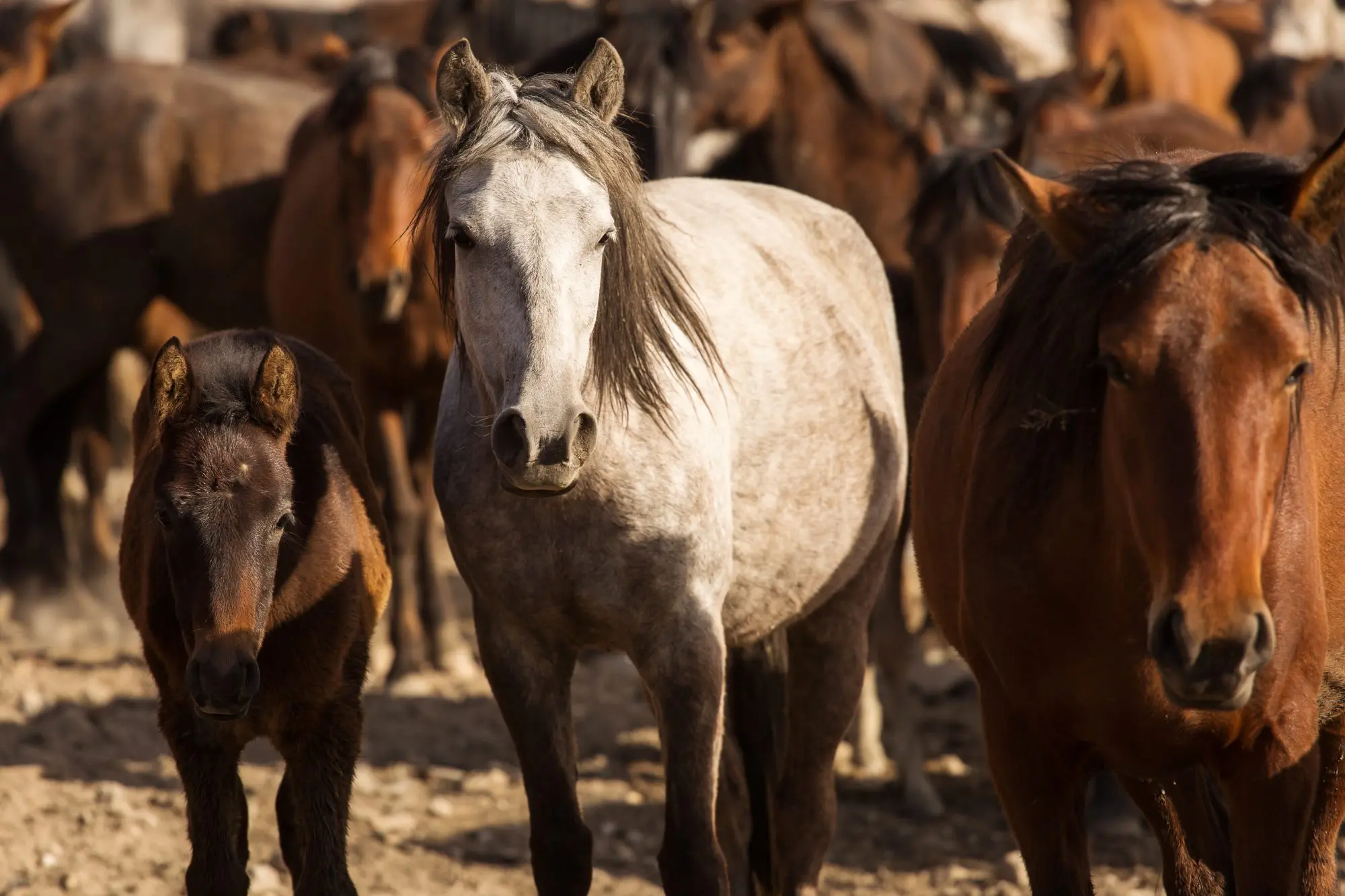
For centuries, the economic role of horses was linked to transport and riding. For a long period, domestic horses also provided people with milk, meat, and hides for clothing. Under modern conditions, productive horse breeding accounts for no more than 5%, while horses are now used mainly for equestrian sport and decorative purposes.
Feeding recommendations
Horses should preferably be fed 3–4 times a day at the same time each day to support proper digestive function. Both overfeeding and hunger are harmful. The feeding regime should be adjusted according to age, sex, workload, and season.
For foals aged two to three weeks, the only feed is colostrum and the mare’s milk. At 10–15 days of age, foals begin to imitate the mare and start eating feed. For this reason, supplementation with compound feed or with oats and wheat bran starts at 2–3 weeks of age. It is advisable to provide a special feeder with a grid for foals. Early adaptation to plant-based feed supports proper gastrointestinal development. Milk replacers are used for orphan foals.
Feeding of lactating mares depends on body weight and milk yield. Diets for sport horses must fully meet energy and protein requirements without promoting excess fat deposition. Horses used for endurance riding require balanced feeding to avoid joint problems, metabolic disorders, and dehydration. The ration should supply glycogen as an energy source and protein to support muscle function.
For normal digestion, horses need roughage, mainly hay. Hay may be partly replaced with beet pulp and soybean hulls. Carrots are often added, and during summer, pasture or freshly cut grass can fully meet roughage requirements. Concentrate feeds include oats, rolled barley, corn, and oilcake. Salt is an essential feed component for horses, and during periods of heavy training, energy supplements such as molasses, flaxseed, and vegetable oil may be added.