Products
For Household Farming
Turkeys
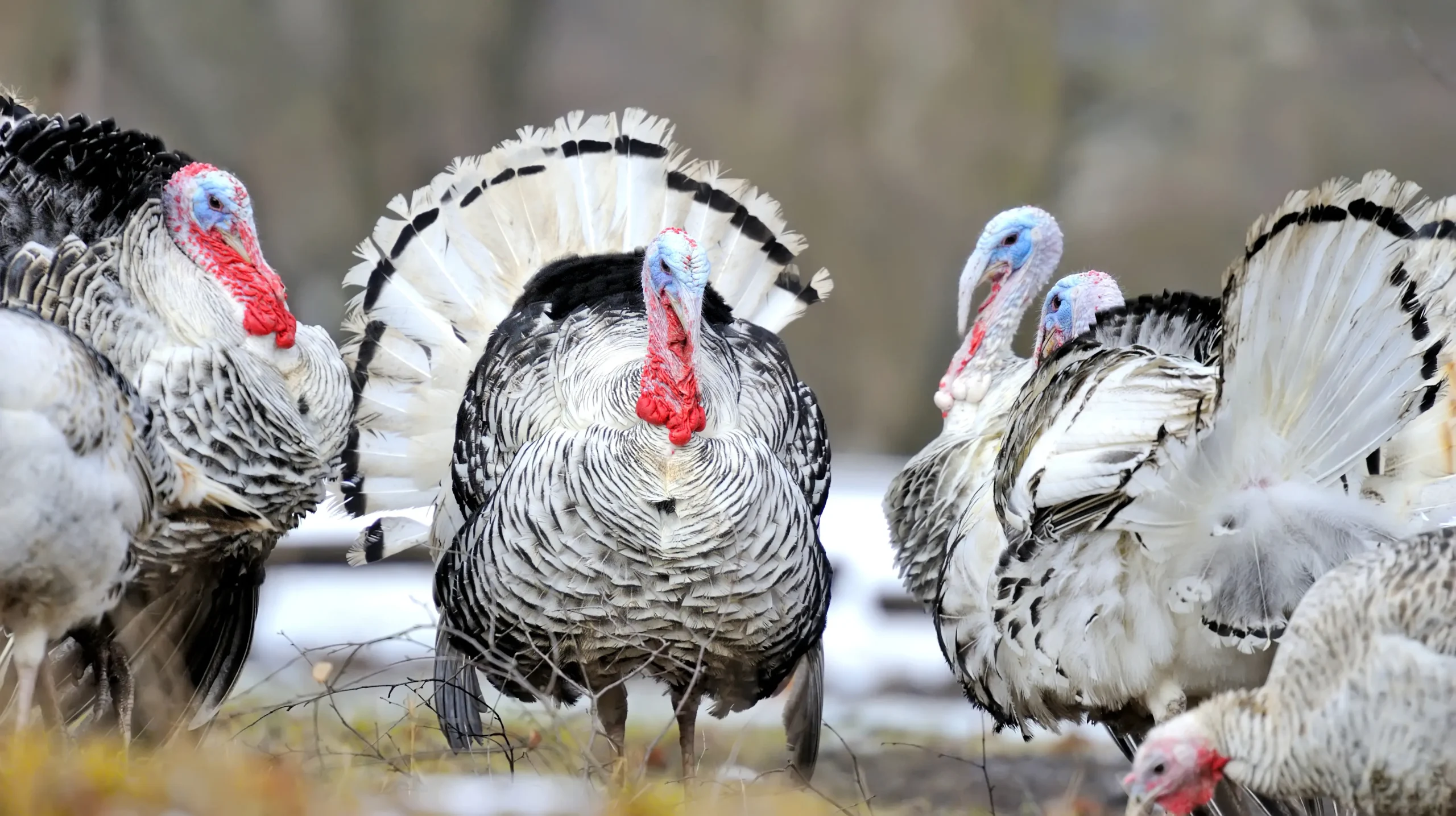
The health and productivity of turkeys largely depend on their balanced diet and housing conditions. Optimal microclimate, space, biosecurity, and a balanced ensure the best target weight gains.
Genetics suppliers’ recommendations
Learn more about feeding practices and housing technologies
 Download the brochure

Feeding recommendations
The skeletal, immune and cardiovascular systems in turkeys are formed during the first four weeks of rearing. Therefore, excellent health status depends on the feed quality and turkeys’ ability to consume a sufficient amount of it. During the first 24–72 hours, turkeys should receive feed with an optimal particle size distribution and minimum amounts of dust-like particles.
In the first days, the feed for poults is spread on sheets of paper or egg trays, which must be regularly replaced due to contamination. This allows poults to find feed within the first 12 hours after placement. Feed consumption is checked by palpating the crop after feeding: in hungry birds it is empty or slightly filled. If many poults are found in this condition, weak birds should be separated immediately, stocking density should be reconsidered, more feeders should be added, feeders should be moved closer to the light, etc.
Turkey poults do not tolerate sudden changes in feed. Therefore, each new type of feed should be introduced gradually, preferably in the morning, rather than in the evening, so that the young birds have more time during the day to adapt to such a "stress" factor.
The feed should have sufficient texture so that young birds can pick up the particles. Small particles and dusty feed are poorly consumed by turkeys, while excessively large cannot be swallowed. The transition from crumble to pellets should be gradual to preserve the advantages of the initial growth stage. The first pellets introduced into the diet after crumble should be in the form of micropellets (short pellets 4-5 mm long) and not too hard. To reduce changes in the bird's diet, a gradual transition between two consecutive feeding programs should be achieved by mixing the two diets for 1-2 days.
Birds are very sensitive to changes in the physical properties of feed. Feed intake will remain constant if pellet quality is stable. Grower and finisher feed should be provided in pellet form.
The ingredients used in turkey nutrition should be highly digestible and of the best possible quality, as young birds are sensitive to protein levels. Excessive levels of indigestible protein can negatively affect productivity and health, and undigested protein can accumulate in the caecum, causing digestive tract disorders.
The starter diet should provide poults with energy, essential amino acids, vitamins and minerals. The feed manufacturer maintains zero Salmonella levels in the feed.
As turkeys age, they require increased levels of metabolic energy for tissue growth, development, and activity. Feeding programs are based on genetics suppliers’ recommendations and local raw material availability.