Products
For Household Farming
Pigs
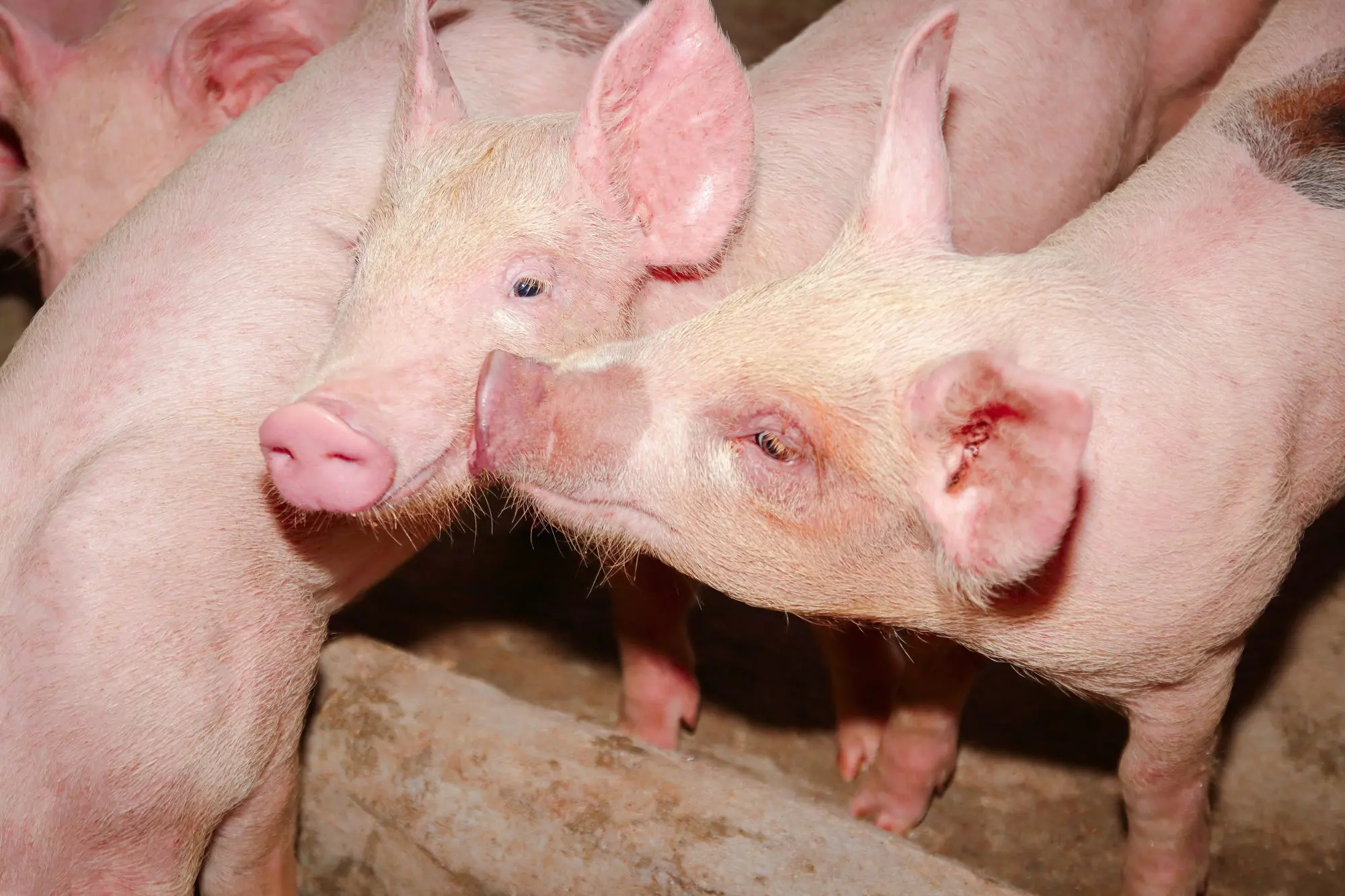
Pig production requires comfortable, clean, and well-ventilated facilities with controlled microclimate conditions. Feeding should rely on balanced diets that include cereals, protein ingredients, and mineral supplements to support rapid growth, good health, and high productivity.
Genetics suppliers’ recommendations
Learn more about feeding practices and housing technologies
 Download the brochure

Feeding recommendations
When phase feeding is applied during the fattening period, feed formulas change gradually with lower levels of protein and amino acids. As pigs grow older, their requirement for amino acids decreases. Phase feeding therefore improves protein utilization and reduces nitrogen content in manure.
For piglets weighing up to 50–60 kg, feed intake is mainly controlled by digestive capacity. When the digestive tract is filled, the animals stop eating. When the digestive system becomes full, the feeling of hunger disappears. This represents a physical mechanism that regulates feed intake.
For piglets weighing over 60 kg, feed intake is regulated mainly by chemical signals. Hunger appears when nutrient levels in the blood decrease. Pigs with high feed conversion, linked to strong genetic potential, may consume more feed than necessary until chemical regulation begins to reduce intake. For this reason, feeding should stop about 30 minutes after feed distribution. For piglets with live weight above 60 kg, feeders should be empty within 15–30 minutes after feeding. Feeding frequency during this stage usually ranges from 2 to 5 times per day.
Feed manufacturers use data provided by genetic line suppliers to formulate fully balanced feed recipes.