Products
For Household Farming
Cattle
Feeding recommendations
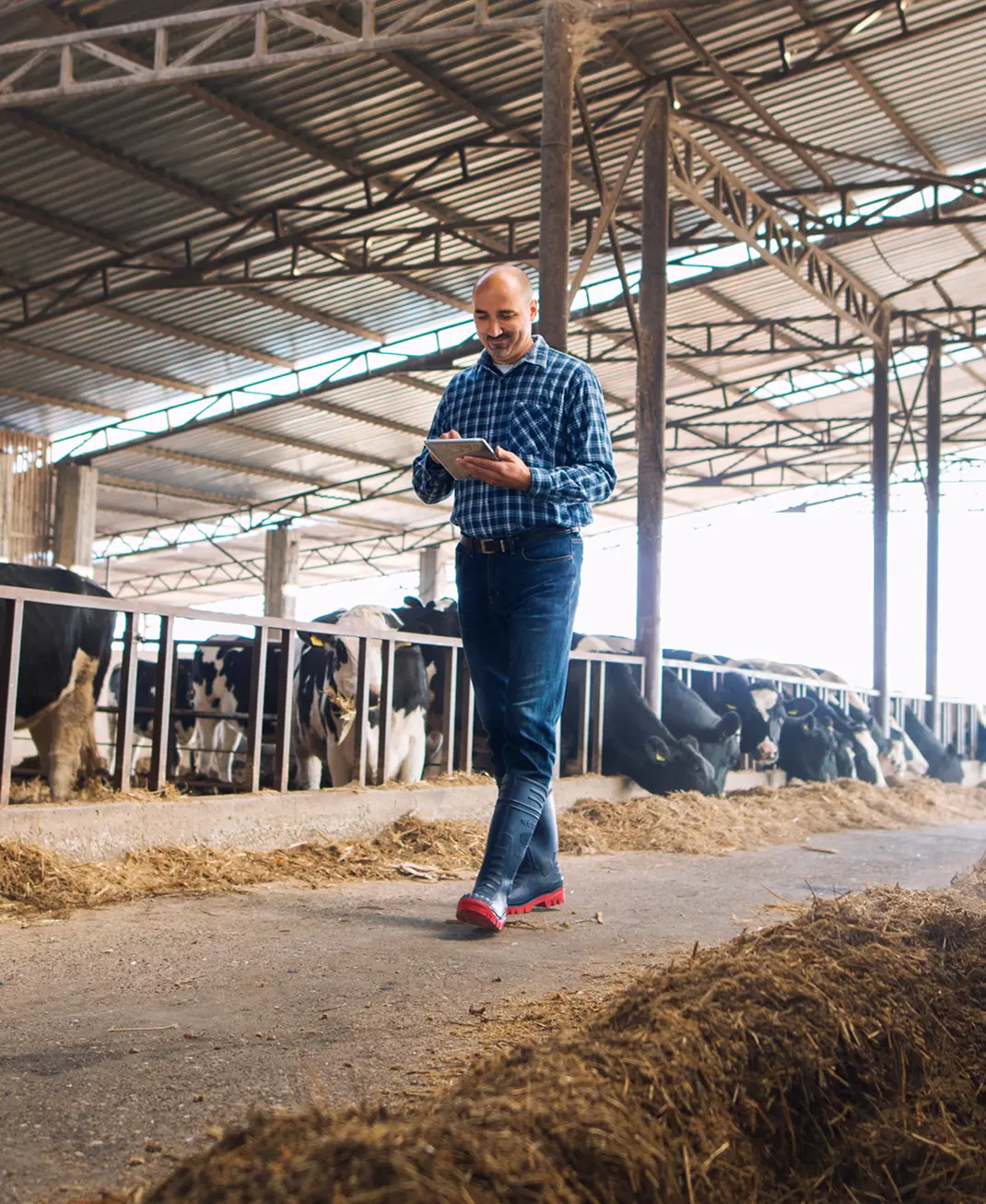
In modern farms, dairy cows are fed a mixture of forage and concentrate feeds in the form of a total mixed ration (TMR). To ensure maximum efficiency, farmers assess body condition, determine body weight and expected productivity, then formulate a diet balanced for energy, carbohydrates, protein, fat, and vitamin-amino acid-mineral content. The calculated ration should match actual feed intake on the farm. To maintain proper intake levels, farmers monitor the ratio between forage and concentrate feeds, control moisture in the mixture, and adjust particle size. During periods of high ambient temperature, the ration may be concentrated to support adequate nutrient intake.
For proper physiology, cows must consume sufficient dry matter. Intake should reach 2.5–4.0% of body weight in lactating cows and 1.5–2.5% in dry cows. Diets for lactating cows should contain 60–65% forage to maintain normal rumen function. The level of non-structural carbohydrates should not exceed 35–40%. Excess intake of starch carbohydrates may lead to acidosis. Besides fibre level, its physical effectiveness must also be controlled through particle size. Forage particles should measure 11–40 mm. To supply dairy cows with essential nutrients, farms use roughage, succulent feeds, concentrates, and functional additives such as vitamin-mineral premixes, sorbents, hepatoprotectors, and rumen health modifiers.
Hay is an important component of roughage. High-quality roughage includes alfalfa hay with 15–18% moisture, which serves as a source of protein, fibre, and carotenoids. Cereal straw is usually used as an inexpensive balancing material to increase fibre level in the diet.
The main succulent feeds for cows are corn silage and legume–grass haylage. High-quality corn silage should have a green colour, a fruity and slightly sour aroma, good looseness, and no stickiness. Silage pH should remain within 3.7–4.2, with lactic acid as the dominant acid. Dry matter content should range from 30–38%, while neutral detergent fibre (NDF) should remain within 35–50%.
High-quality haylage has a green colour, no signs of spoilage, and a pleasant herbal aroma. It contains a high dry matter level (50–55%), crude protein above 18%, and low acidity (pH 4.0–4.2). Its acid profile is also dominated by lactic acid (over 75%). Neutral detergent fibre should not exceed 70%, and digestibility should remain above 70%.
Concentrated feeds are produced from cereal grains, legumes, and oilseed crops, used either in their raw form or after processing. Typical ingredients include ground or rolled corn, barley, wheat, bran, distillers grains, soybean, sunflower or rapeseed cake and meal, beet molasses, and other locally available products.
Vitamin-mineral premixes are used according to specific formulations, while functional additives are applied when needed. Diets with high starch polysaccharide levels should include buffer premixes to reduce acidosis risk. After calving, liquid energy supplements with calcium help prevent milk fever and displaced abomasum. During the transition period, energy supplements and protected fats help prevent ketosis. To bind mycotoxins, diets should include sorbents. Hepatoprotectors help prevent fatty liver. Horn tissue modifiers support hoof health, and hoof bath solutions help prevent diseases of the distal limb.