Products
For Household Farming
Care
 Download the brochure
-
To maintain the health of the livestock, it is necessary to carry out a set of measures for vaccination, disinfection, disinsection, deratization and other work designed to prevent pathogen exposure. In particular:
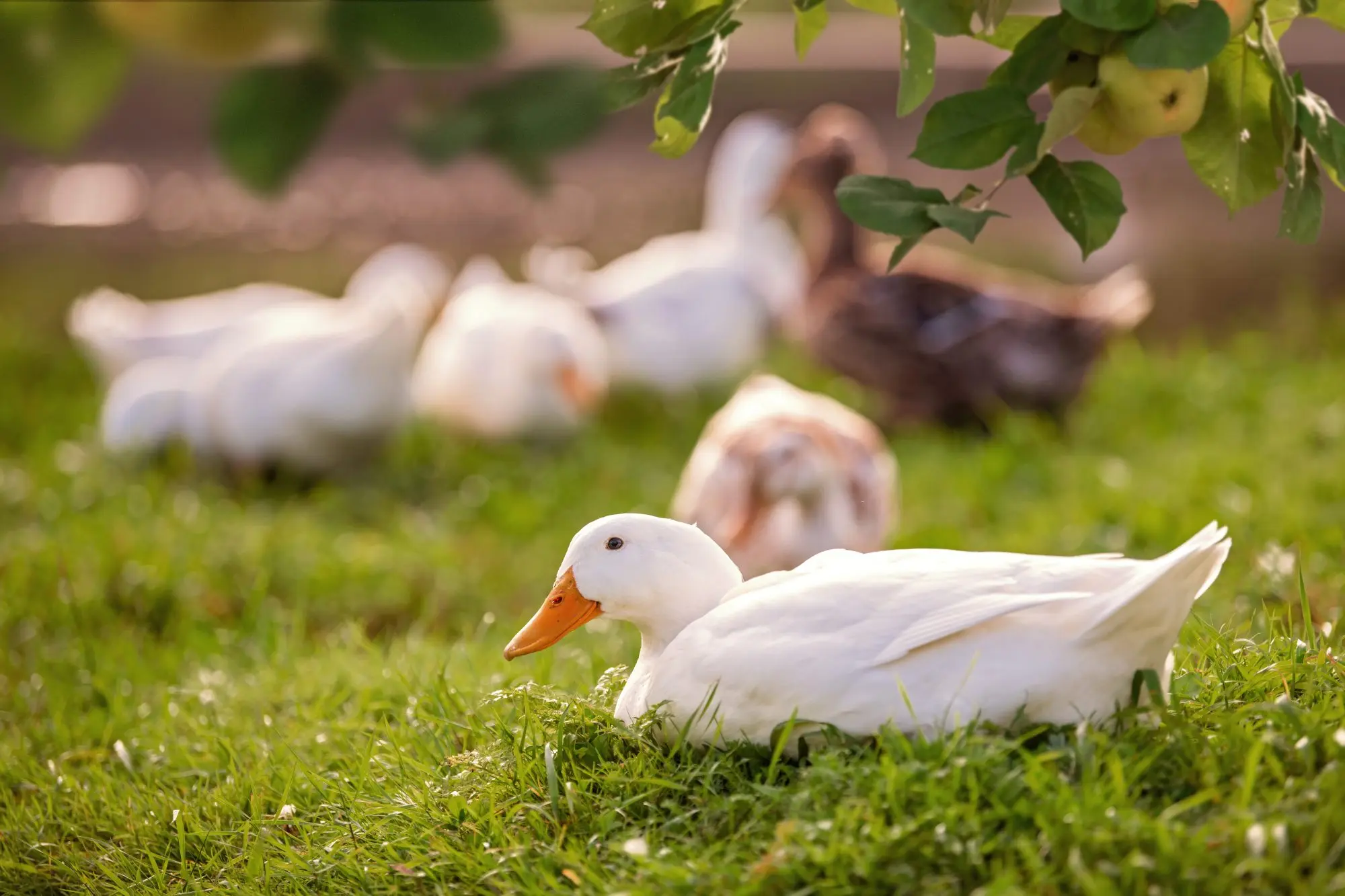
- keep ducks in a separate house, isolated from other poultry species, domestic or wild animals, rodents and insects;
- limit non-essential visitors to the poultry house;
- before placing ducklings in the poultry house, thoroughly clean and wash floors, walls, and equipment, and allow them to dry completely. Make repairs if necessary;
- a minimum of three days should elapse between final disinfection and bird placement;
- vaccinate according to schedules recommended by genetic companies, poultry suppliers, and competent veterinary authorities.
-
Only healthy birds can realise their genetic potential. The health of young stock begins with the quality and biological value of eggs used for incubation, proper incubation conditions, and appropriate management of the goslings. Goslings are assessed no earlier than 6–8 hours after removal from the incubator.
Healthy ducklings are active, respond to sound, show a strong feeding response. To assess how the ducklings react to sound, you can tap the edge of the box: the ducklings should briefly become quiet.
-
The house should be prepared for the next flock after each batch. After each flock of ducks, it is necessary to dismantle the equipment, clean and disinfect it. The area should be cleared of organic residues. Contaminated walls, floors, and equipment are pre-washed using high-pressure washers until the structure and colour of the surface can be seen.
After mechanical cleaning, liquid disinfectants are applied, disinfection barriers are installed, and the sanitary break is maintained for biological disinfection and drying of the house.
After the current repair and installation of equipment, litter is placed in and gas disinfection is carried out. Disinfectants must be officially approved and used according to the manufacturer’s instructions.
-
High-quality litter should have high absorbency, biodegradability, comfort for the birds, low dust content and be free from pathogens. Suitable materials include:
- pine shavings,
- granulated straw,
- sunflower husks,
- peat.
It is not advisable to use dry sawdust, since a hungry bird can peck at it, which leads to digestive disorders and even death.
The litter is laid in a single layer for the entire rearing period or in a layer of 5–7 cm and as it becomes wet, a new one is added every 10–20 days. However, the thickness of the bedding in the summer should not exceed 10–12 cm.
-
When rearing on the littered floor with sex ratio 50:50, stock density should be 6 birds per 1 m2 and subsequently 5 birds per 1 m2 while maintaining a maximum of 20 kg live weight per m².
-
In the first days, brooder guards are installed to form a brooder zone, with heaters installed above them. The air temperature under the heater is maintained at 38–40 °C for the first 1–3 days, and in the room at 25 °C, and is gradually reduced during the rearing period to 15–17 °C at the age of 28–30 days.
The ventilation system should provide the poultry with clean air with low levels of ammonia and hydrogen sulphide and remove excess moisture to maintain humidity at 60–70%.
The lighting program should provide uninterrupted access to feeders and drinkers for the first 24 hours, and in the next 2–3 weeks the lighting duration should be reduced from 24 to 16 hours. In the subsequent period, 12 hours of artificial or natural light are sufficient for ducks.
-
On small farms, one vacuum drinker is enough for every 50–60 ducklings. These should be removed after 2 weeks of rearing. Nipple drinkers are installed every 25 cm at the rate of 5 ducklings per 1 drinker, and round bell drinkers are installed at the rate of 150–200 ducklings per 1 drinker.
Birds should have unlimited access to clean, fresh, and high-quality water. The optimal water temperature is 15–21 °C. The farm should maintain a 24-hour water reserve. Ducks consume large amounts of water, so a water-to-feed ratio of 2–5:1 is considered normal. In addition, water intake increases by 6.5% for every degree above 21 °C.
-
The basis for successful duck farming is good flock health. Specific flock health management concepts, coordinated with the veterinarian, play a central role.
The vaccination program is implemented based on the epidemiological situation in the country and region. Daily monitoring of feed and water intake, mortality rate and weekly weighing are critical for early disease detection and help prevent the spread of diseases in subsequent flocks.
Our partners and stores in Romania